
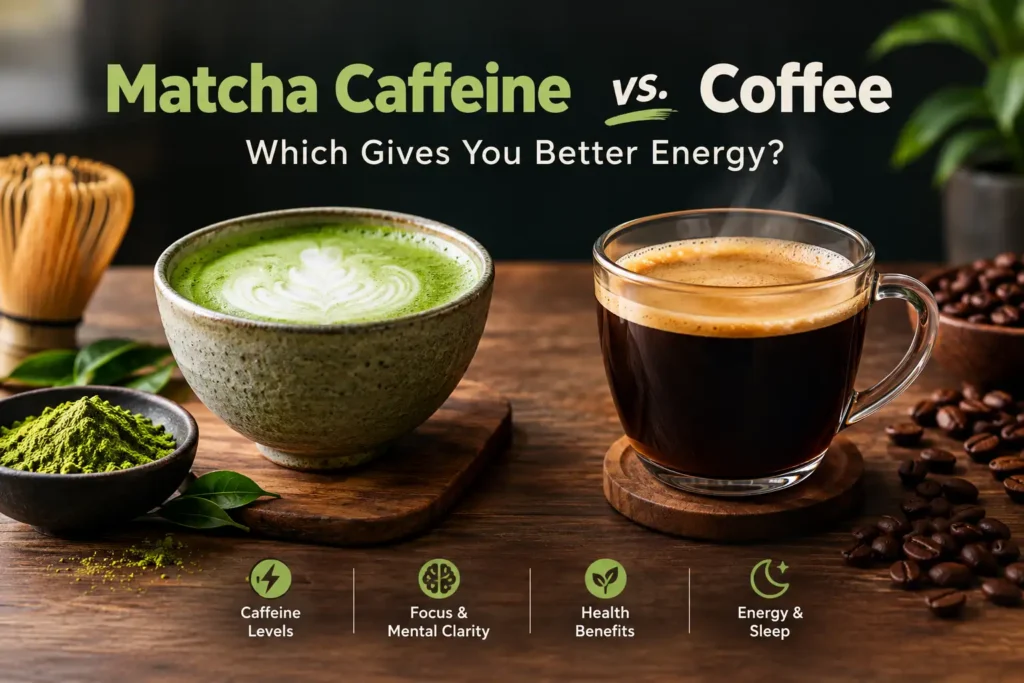
If you love coffee but want to try something different, Matcha might be worth adding to your daily routine. Both drinks contain caffeine; both can help you feel more alert, and both come with their own flavor, preparation style, and potential benefits. However, the amount of caffeine in your cup can be surprisingly different. So, when it comes to Matcha caffeine vs. coffee, which drink gives you more energy? Is Matcha better for focus, and does coffee really cause more jitters?
The answer depends on how you prepare your drink, how much caffeine you tolerate, and what you want from your morning beverage. Let’s compare the two using practical serving sizes and current research.
Also, check the difference between Decaf and Regular Coffee.
How Much Caffeine Is in Matcha vs. Coffee?
For most people, a standard cup of brewed coffee contains more caffeine than a typical serving of matcha. However, a strong matcha made with extra powder can approach or even exceed the caffeine in some coffees.
According to Harvard Health, an 8-ounce serving of matcha typically contains around 38–89 milligrams of caffeine, compared with approximately 100–120 milligrams in coffee. Actual amounts vary by product and preparation method.
Matcha vs. Coffee Caffeine Comparison
| Drink | Typical serving | Approximate caffeine |
| Matcha tea | 2 g matcha powder | 38–89 mg |
| Matcha latte | 2 g matcha powder with milk | 38–89 mg |
| Brewed coffee | 8 oz (237 ml) | 96 mg |
| Instant coffee | 8 oz (237 ml) | 62 mg |
| Espresso | 1 oz (30 ml) | 63 mg |
| Brewed green tea | 8 oz (237 ml) | 29 mg |
These are approximate reference values, not guarantees. Matcha caffeine varies with powder quantity and product; coffee caffeine varies with beans, brewing method, and serving size. Milk does not remove the caffeine from a matcha latte.
The important detail: compare the caffeine in the entire drink, not just its size. A large iced latte may contain two espresso shots, while a large matcha latte might use only one or two grams of powder.
What do you prefer, latte vs coffee?
Why Does Matcha Contain Caffeine?
Matcha is a finely ground powder made from specially grown green tea leaves. Unlike ordinary green tea, where the leaves are steeped and removed, matcha is whisked into water and consumed as a suspension of the powdered leaves.
This difference matters because you’re consuming the whole powdered tea rather than only the liquid extracted from steeped leaves.
Matcha also contains L-theanine, an amino acid naturally found in tea. Research suggests that L-theanine, particularly when combined with caffeine, may influence attention and mood.
However, the size and consistency of these effects are still being studied.
Coffee contains caffeine too, but its overall chemical composition differs. It contains compounds such as chlorogenic acids, and its flavor and strength depend on the coffee variety, roast, grind size, and extraction method.
What is the difference between white coffee and black coffee?
Does Matcha Give You Smoother Energy Than Coffee?
Many people describe matcha as providing calmer, more balanced energy than coffee. Some coffee drinkers report feeling shaky or anxious after a strong cup, while they find matcha easier to tolerate.
There is a possible explanation: a typical matcha serving may contain less caffeine than a typical cup of coffee, and matcha also contains L-theanine.
However, there’s an important distinction between personal experience and proven science. It has not been firmly established that matcha caffeine is absorbed more slowly or that it reliably prevents an energy crash.
Both drinks deliver caffeine, which stimulates the central nervous system. Your response depends on the dose, your sensitivity, sleep quality, medications, and how frequently you consume caffeine.
A useful tip: if coffee makes you jittery, try a smaller coffee or a matcha prepared with a measured amount of powder. You may find that reducing your caffeine dose matters more than changing drinks altogether.
Matcha vs. Coffee: Which Is Better for Focus?
Both beverages can improve alertness and help you feel more awake. Coffee is a familiar choice when you need a stronger caffeine boost, while matcha may suit people who prefer a milder drink.
Matcha’s combination of caffeine and L-theanine is particularly interesting. A 2025 systematic review and meta-analysis examined 50 randomized controlled trials involving tea, L-theanine, or L-theanine combined with caffeine.
Some results suggested benefits for certain attention and mood measures, but findings varied and further research using real-world tea servings is needed.
That means matcha may be a useful option for focused work, studying, or reading, but it isn’t a guaranteed concentration booster. Coffee can work well for the same activities.
Your best choice is the drink that makes you alert without leaving you uncomfortable or interfering with your sleep.
You can also check the difference between black coffee and espresso.
Antioxidants: Is Matcha Healthier Than Coffee?
Matcha and coffee both contain naturally occurring plant compounds, so it isn’t accurate to call one universally healthier.
Matcha provides catechins, including EGCG, a green tea compound widely studied for its biological effects. Because matcha is consumed as powdered leaves, it can deliver these compounds differently from ordinary brewed green tea.
Coffee provides chlorogenic acids and other compounds that have also been studied for potential health effects.
However, the presence of antioxidants does not automatically mean a drink will prevent disease or produce a specific health benefit.
Research findings depend on the amount consumed, the outcome being studied, and a person’s overall diet and lifestyle.
For everyday choices, pay attention to what you add. A matcha latte loaded with syrup and a coffee topped with several pumps of flavored syrup can contain considerable added sugar.
Unsweetened versions give you more control over sweetness and calories.
Which Drink Is Better for Your Stomach and Sleep?
Neither matcha nor coffee is automatically easier on everyone’s stomach. Coffee can trigger heartburn or digestive discomfort in some people, but matcha can also cause nausea or stomach irritation, especially when consumed in large amounts or on an empty stomach.
If either drink bothers you, try having it with food, reducing the serving size, or choosing a different preparation method.
Sleep deserves equal attention. Caffeine can remain in your body for hours after drinking it. The FDA notes that sensitivity varies considerably between individuals, and too much caffeine can cause insomnia, anxiety, a fast heartbeat, or an upset stomach.
For most healthy adults, up to 400 milligrams of caffeine per day is generally not associated with negative effects, although some people experience symptoms at much lower amounts.
People who are pregnant, trying to become pregnant, or breastfeeding should ask their healthcare professional about appropriate limits.
If sleep is a concern, try avoiding both drinks later in the day rather than assuming matcha is caffeine-free or harmless at night.
How to Choose Between Matcha and Coffee
Choose coffee if you enjoy its roasted flavor, want a familiar caffeine boost, or prefer espresso-based drinks such as cappuccinos and lattes.
Choose matcha if you enjoy its earthy, slightly grassy taste, want an alternative to coffee, or prefer controlling your caffeine intake with a measured quantity of powder.
You don’t have to choose just one. Some people enjoy coffee in the morning and matcha on another day. Just count the caffeine from both drinks, along with tea, chocolate, energy drinks, and other sources.
A Simple Matcha Caffeine Guide
- Want less caffeine? Start with a small, measured matcha serving or a smaller coffee.
- Need a stronger boost? Brewed coffee often provides more caffeine per serving, although strong matcha can contain substantial amounts too.
- Sensitive to jitters? Reduce the total caffeine dose and notice how your body responds.
- Trying to sleep better? Drink caffeinated beverages earlier and keep track of your personal cutoff time.
Frequently Asked Questions
Usually, a standard cup of brewed coffee contains more caffeine than a typical matcha serving. However, strong matcha prepared with extra powder can contain as much caffeine as some coffees.
A matcha latte made with 2 grams of matcha powder may contain approximately 38–89 milligrams of caffeine. The exact amount depends on the powder and recipe. Milk and sweeteners do not eliminate the caffeine.
There is not enough strong evidence to conclude that matcha reliably prevents caffeine crashes. Your caffeine dose, sleep, meals, and individual sensitivity may all affect how you feel.
Some people tolerate matcha better because their serving contains less caffeine. However, matcha still contains caffeine and can trigger anxiety or jitters in sensitive individuals.
Yes, many adults can consume both, provided their combined caffeine intake stays within an appropriate limit for them. Remember to count other caffeine sources throughout the day.
Macchiato vs latte vs cappuccino vs Americano: Comparison
Final Verdict: Matcha Caffeine vs. Coffee
When comparing Matcha caffeine vs. coffee, coffee usually delivers more caffeine in a standard serving, while Matcha offers a different flavor and a combination of caffeine, L-theanine, and tea catechins.
Matcha isn’t guaranteed to provide smoother energy, and coffee isn’t automatically unhealthy. Both can fit into a balanced routine when consumed in amounts you tolerate well.
The smartest choice is the one that matches your taste, energy needs, and sleep schedule. Start with a measured serving, pay attention to how you feel, and remember that more caffeine doesn’t always mean better focus.

Majid Khan is a former barista with 5+ years of hands-on experience in specialty coffee preparation and espresso bar service. He now focuses on helping home coffee lovers brew café-quality drinks using simple methods, practical techniques, and reliable coffee gear recommendations.